Wearable robotics · SCUT
Climbing-Assisted
Hand Exoskeleton
Pressure sensing, active finger assistance, and passive mechanical locking.
Prototype demonstration
From contact sensing
to a held grip.
Fourteen thin-film pressure sensors monitor hand contact. An Arduino controller coordinates finger actuation with a passive ratchet that holds the locked pose.
A research prototype evaluated on a laboratory rig.
My Contribution
Control & integration
Developed the Arduino control software and led project coordination and system integration.
Pressure-sensing glove
Supported construction of the sensing glove and integrated its contact signals into the prototype.
Build & test
Contributed to fabrication, assembly, and experimental testing of the wearable mechanism.
How it works
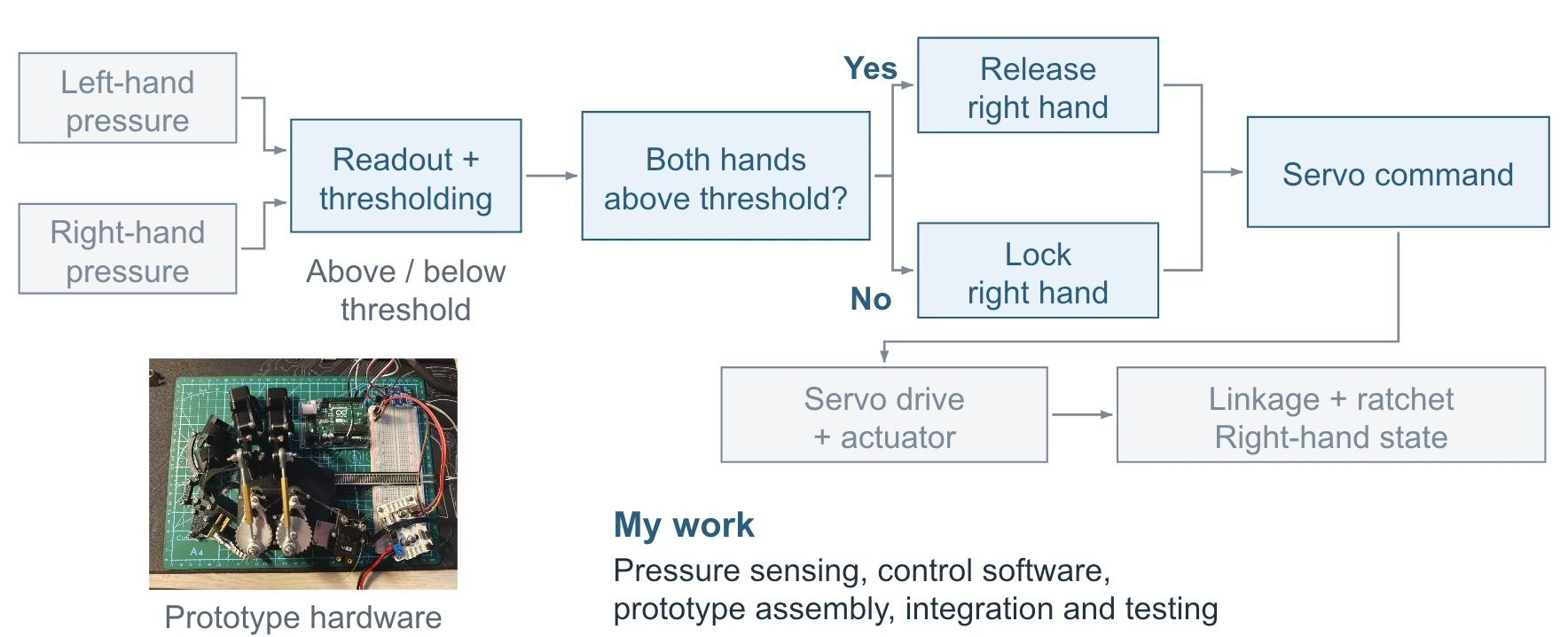
- 01Sense contact
14 RP-L-110 pressure sensors; 100 Hz loop.
- 02Decide the state
Evaluate contact before permitting release.
- 03Move the fingers
HX08L servo and spatial four-bar linkage.
- 04Hold the pose
Cable-operated passive ratchet locking.
- Sensing and control. Pressure signals from both hands are evaluated at 100 Hz. The controller permits a hand to enter transparent mode when the measured contact state supports a safe release; otherwise, it maintains the active hand in its locked state.
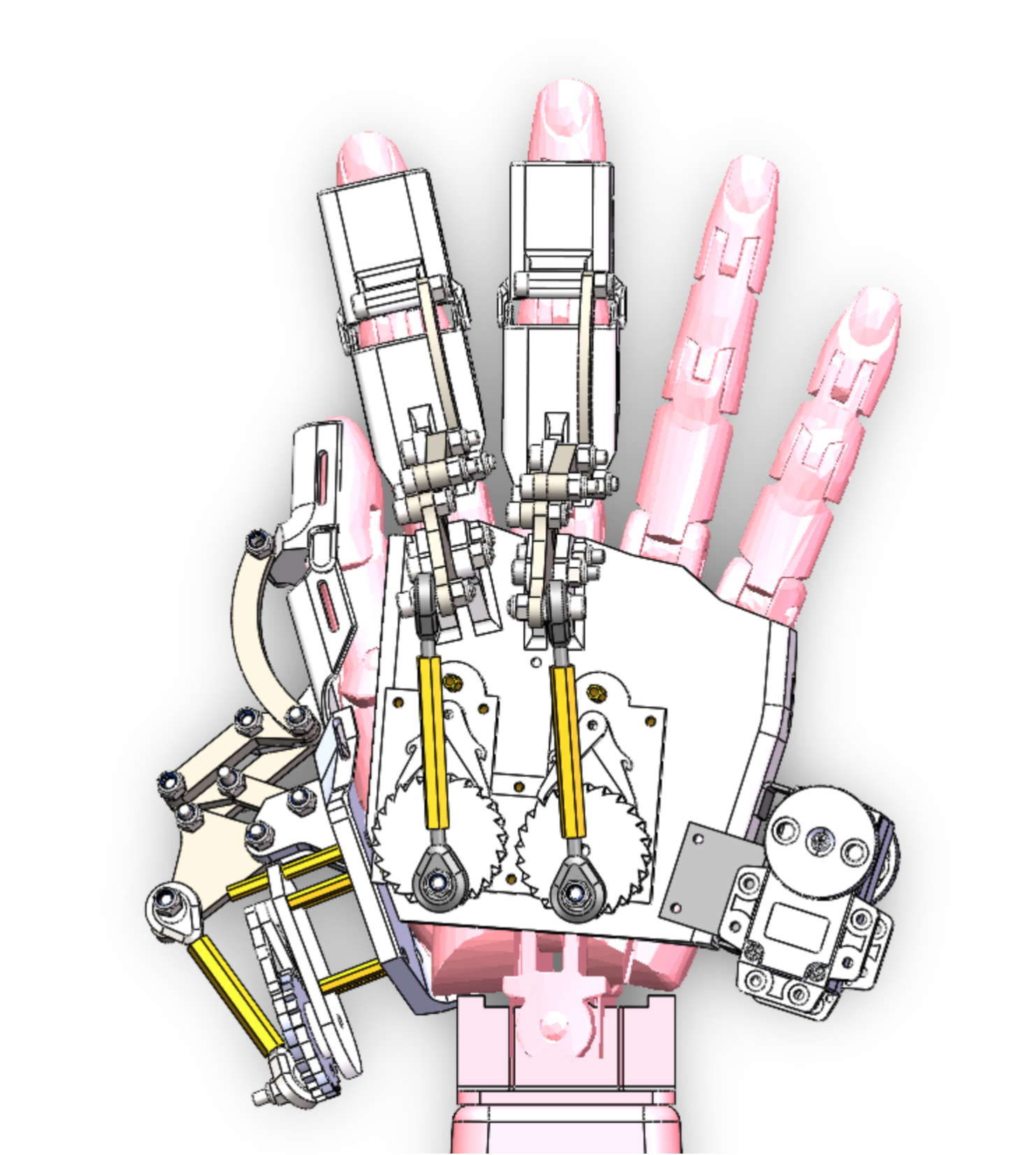
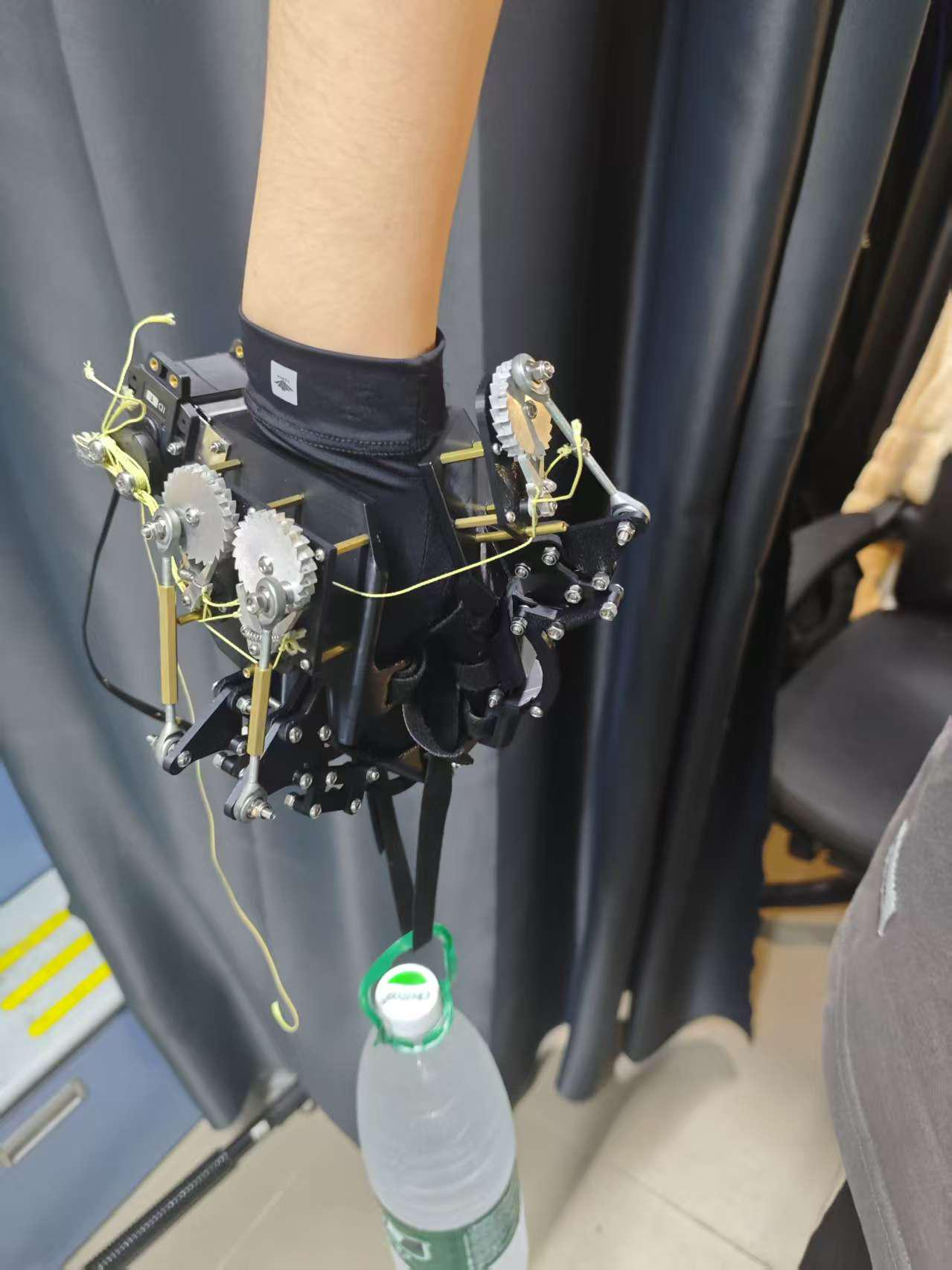
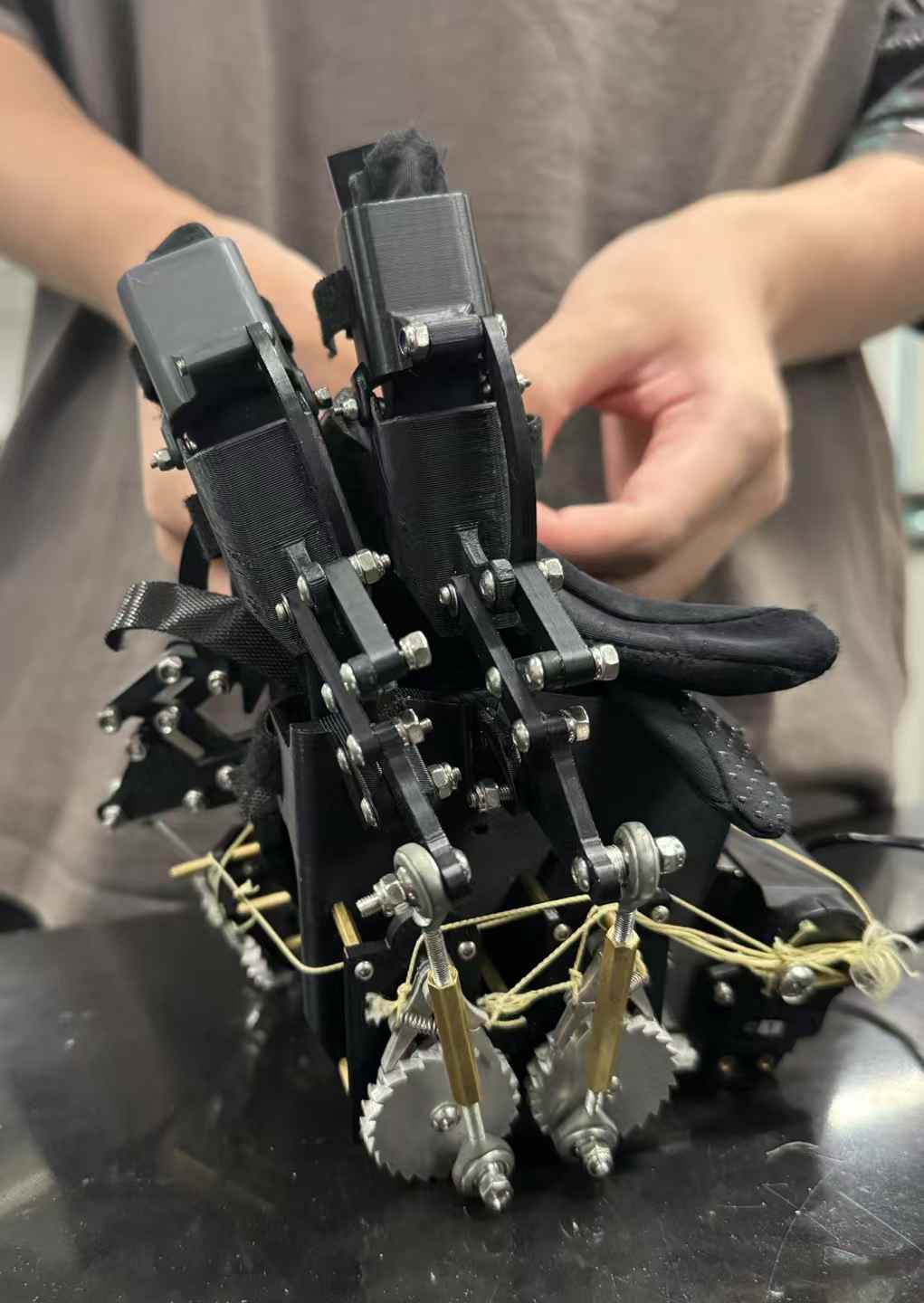
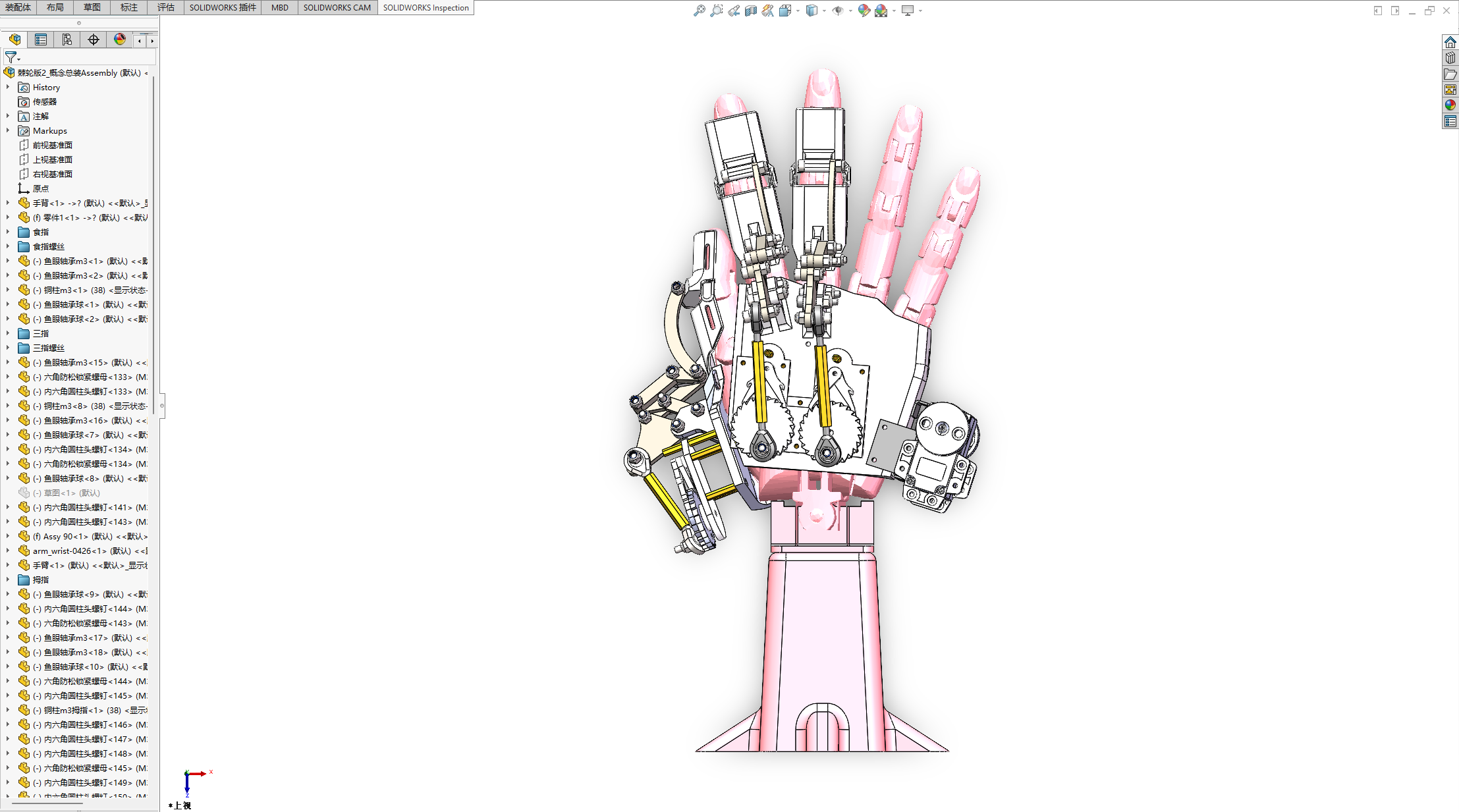
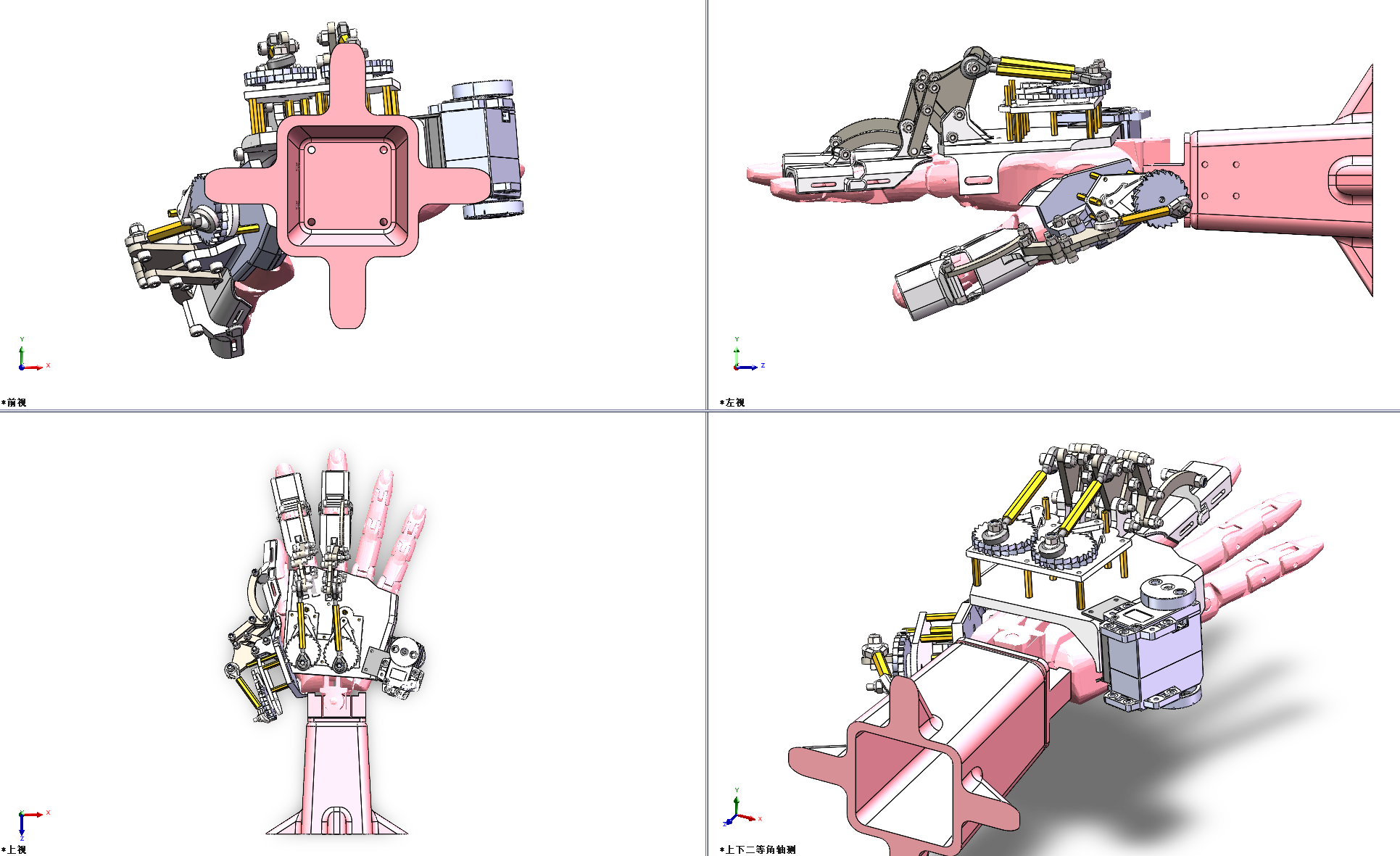
- Actuation and locking. The HX08L servo drives a spatial four-bar linkage that follows the finger's extension-to-flexion motion. A cable-operated, bidirectional ratchet provides passive mechanical locking and is designed to retain the locked pose during power loss.
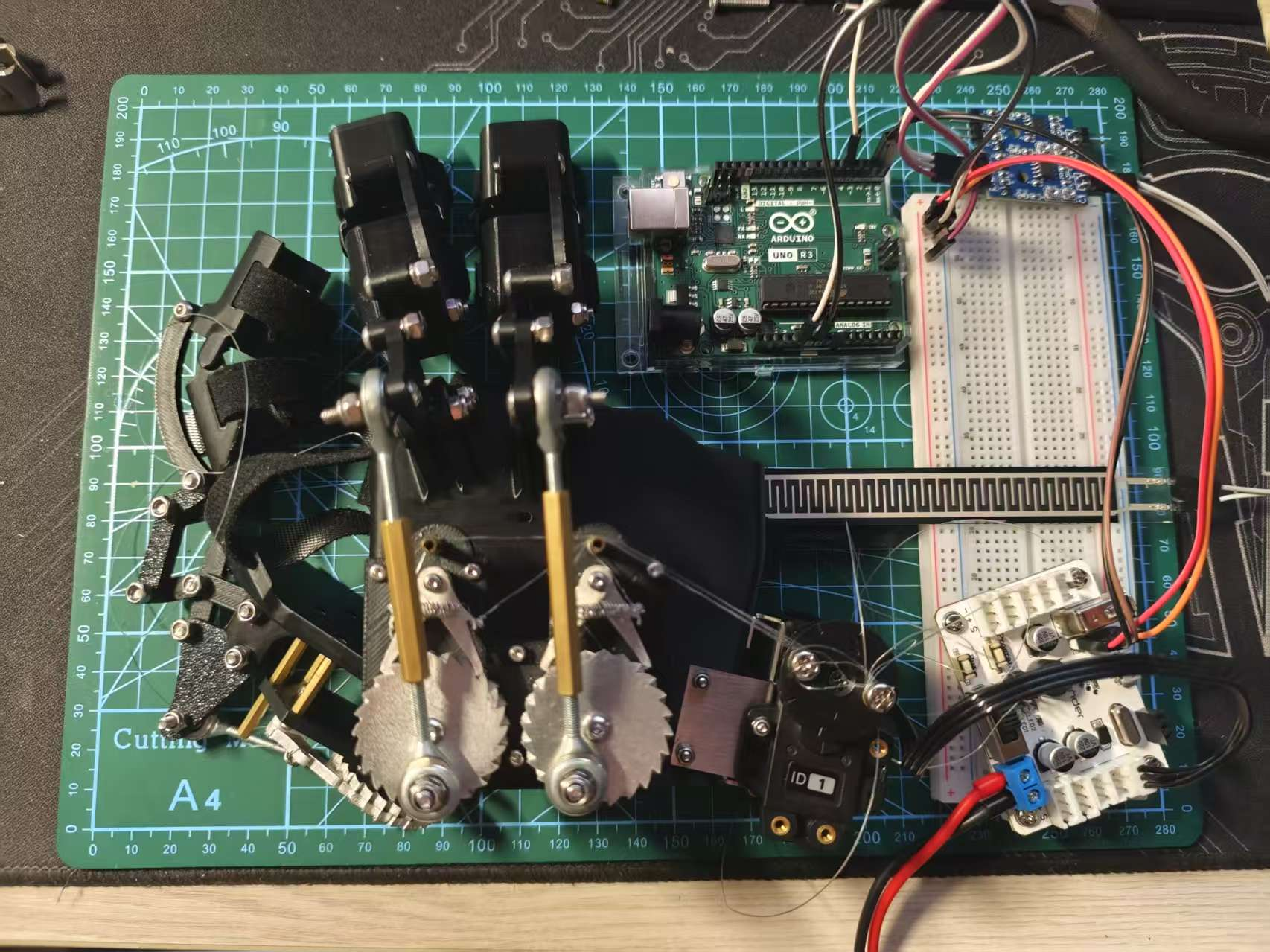
- Electronics and power. An Arduino Uno runs the control logic and communicates with the serial servo through a dedicated UART driver. A single 7.4 V, 2200 mAh two-cell battery pack supplies the servo and the regulated control electronics.
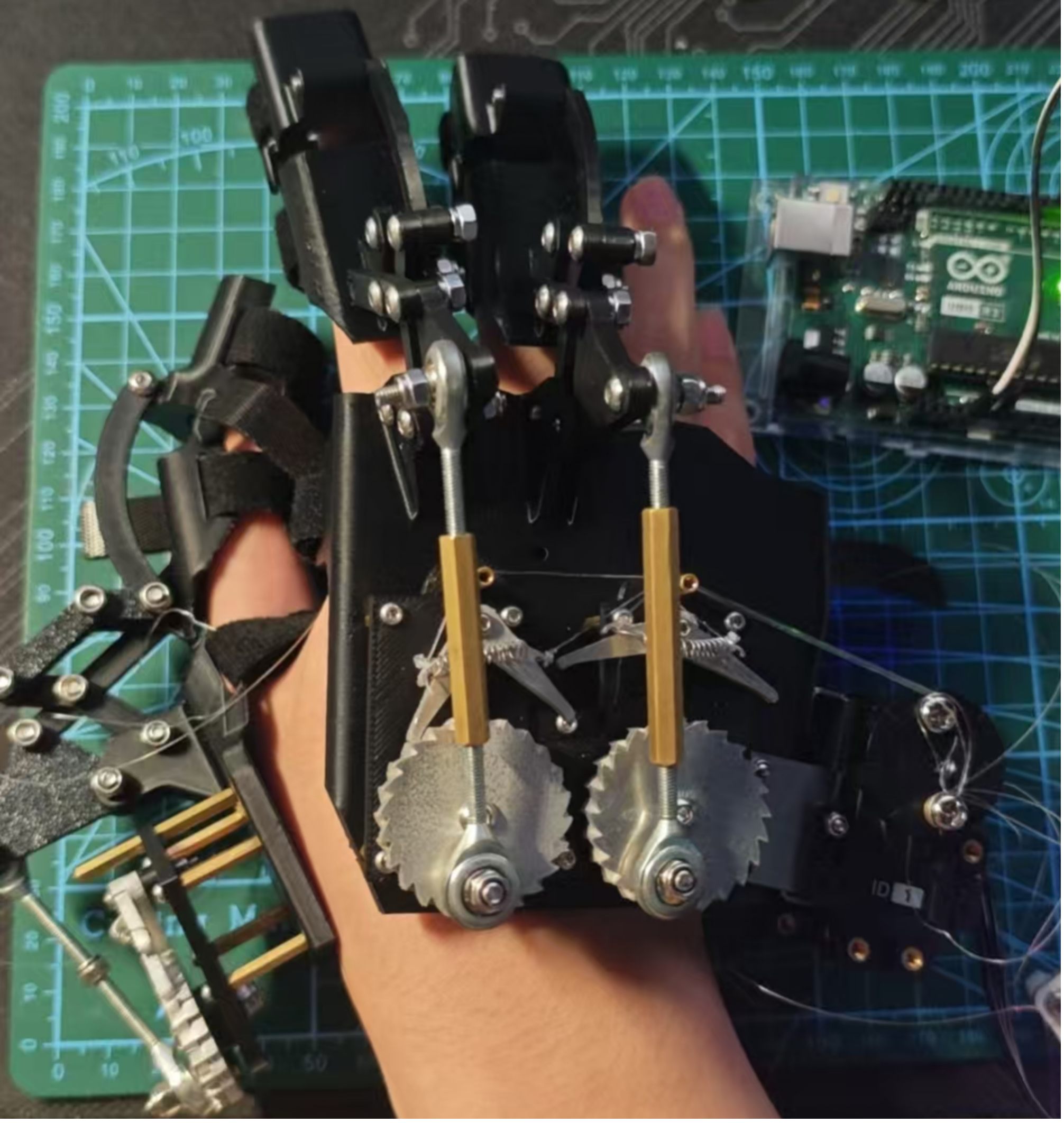
- Mechanical integration. PLA-printed linkage components are reinforced with aluminium ratchet wheels, brass standoffs, and metal joint hardware. The hand-mounted module weighed 448.7 g, and the complete wearable system excluding the battery remained below 1.5 kg.
Prototype photographs & mechanical drawings
What we measured
- Lock time. The mechanism reached the fully latched state in 0.18 s in 60 fps footage.
- Repeated actuation. The fingers completed at least 90% of the full extension-to-flexion range across 50 cycles.
- Static holding test. The grasp showed no measurable slip while holding a 16 N load on a 25 mm-diameter bar for 10 s.
- Inclined-rig trials. Two-minute trials on a 75° climbing rig produced more than 90% successful grasp transitions. The passive ratchet remained engaged during a deliberate single-hand release test.
Prototype scope
This research prototype was evaluated on a controlled climbing rig. The tests characterize its locking response, repeated actuation, static holding behavior, and grasp transitions under the reported laboratory conditions; the device has not been certified as personal protective equipment.
Future development will investigate higher-frequency embedded control, richer contact and joint-state sensing, lighter structural materials, and more extensive endurance and safety evaluation.