Mobile robotics · SCUT
Remote-Controlled
Ball-Collecting Robot
Collect, carry, and release balls with a compact Mecanum-wheel platform.
My Contribution
STM32 motion control
Wrote most of the STM32 control program. Co-tuned the PID and PWM motor-control behavior with a teammate.
System integration
Led the team, contributed to part of the SolidWorks modeling, shared electrical setup and wiring, and assisted fabrication and assembly.
Competition operation
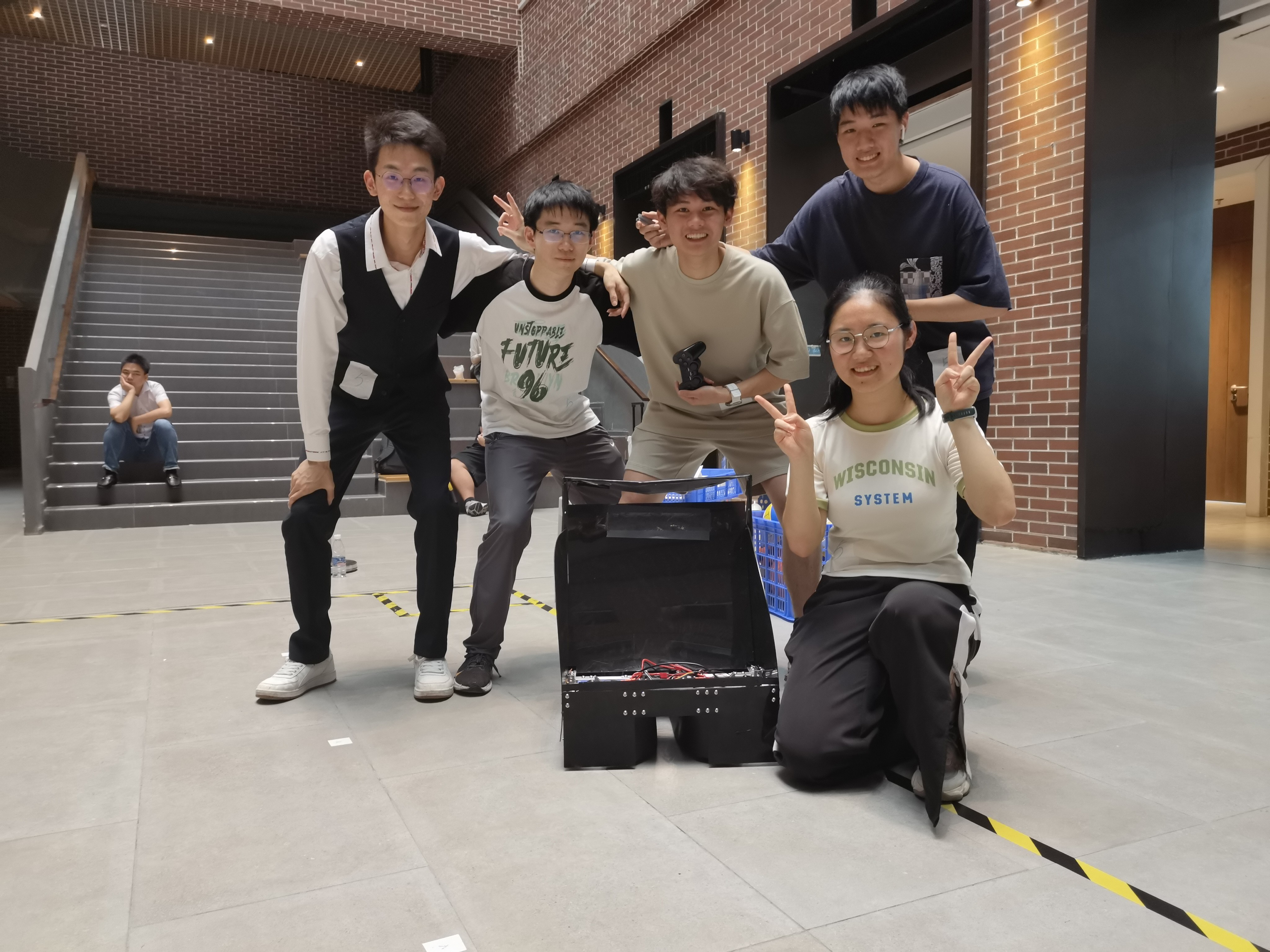
Solely operated the robot by remote control during the competition. The team placed second overall in the final course competition.
A simple collection mechanism
- 01Position
PS2 remote control and omnidirectional wheels.
- 02Collect
Forward motion guides balls past their supports.
- 03Transport
An onboard hopper holds collected balls.
- 04Release
A servo-operated rear gate opens for gravity discharge.
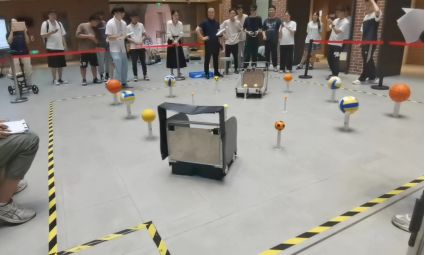
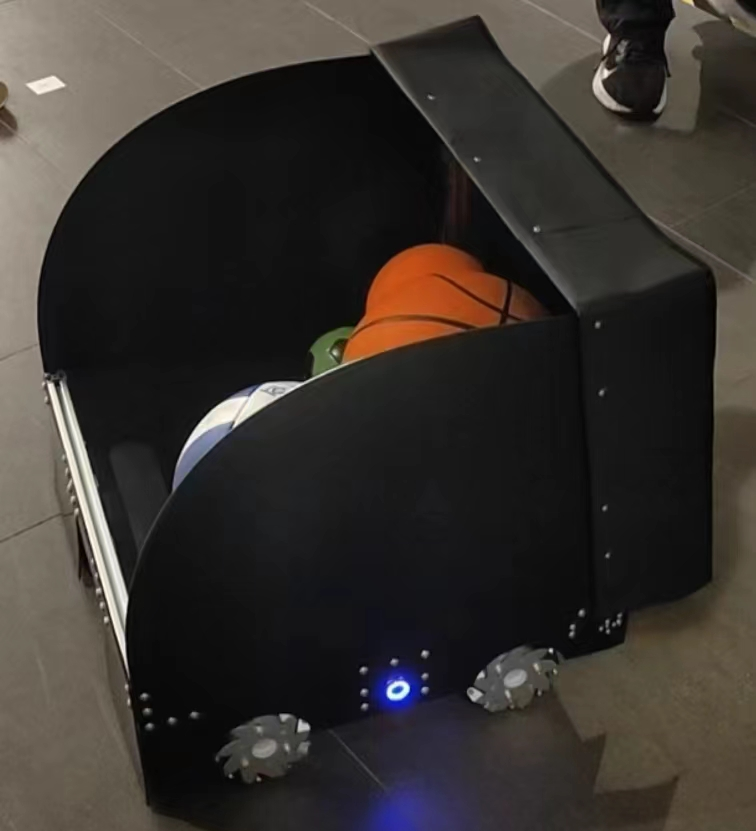
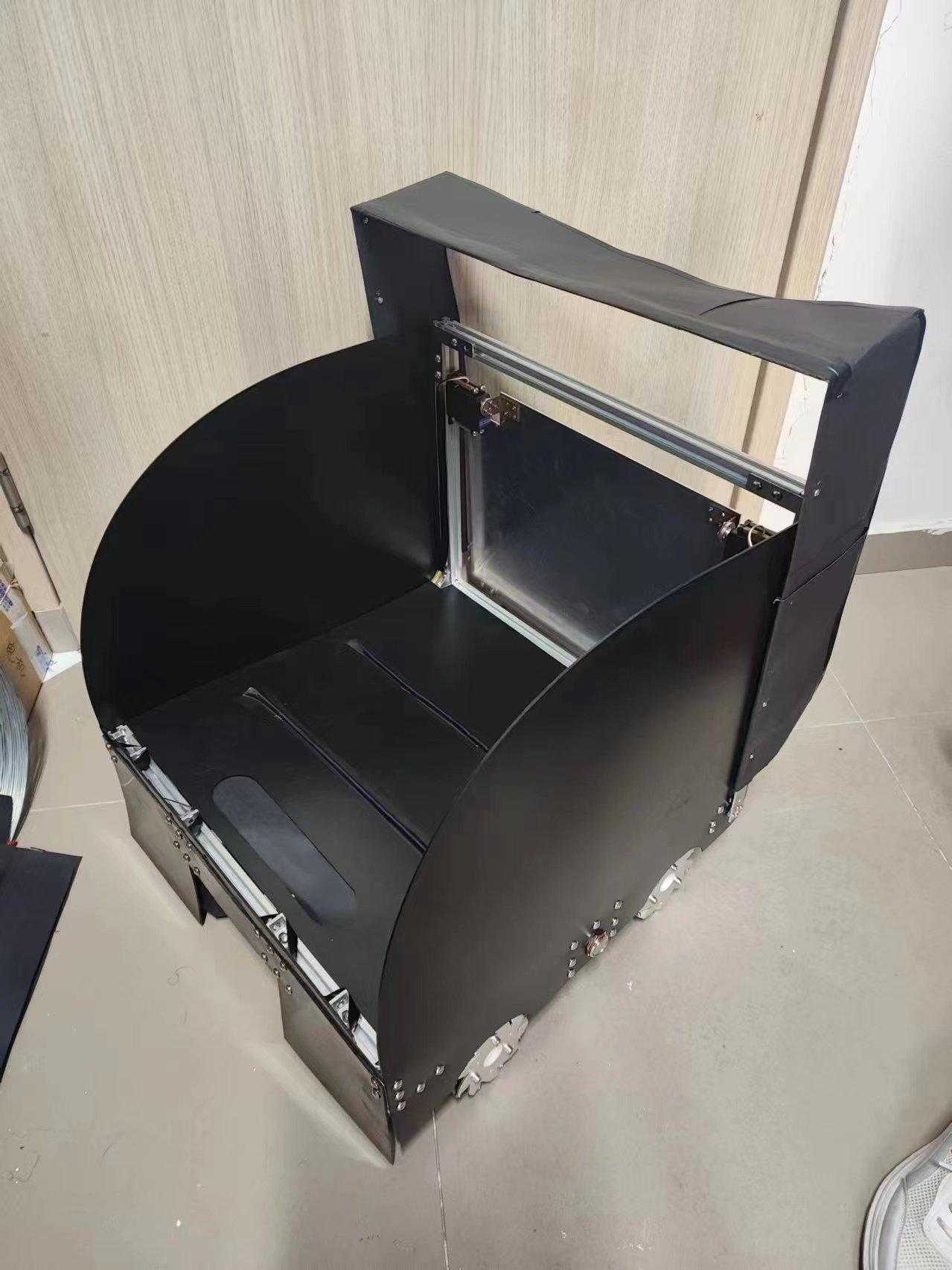
The competition required each vehicle to collect balls of different diameters from supports, transport them across the arena, and release them inside a designated scoring area. The front collection geometry used the robot's forward momentum to push a ball past its support point and onto an inclined internal guide, allowing the ball to roll into the storage area without an active grasping mechanism.
This approach reduced mechanical complexity and left the operator free to focus on positioning the vehicle. The competition video documents the working prototype maneuvering around the arena and collecting balls under remote control.
Control & integration
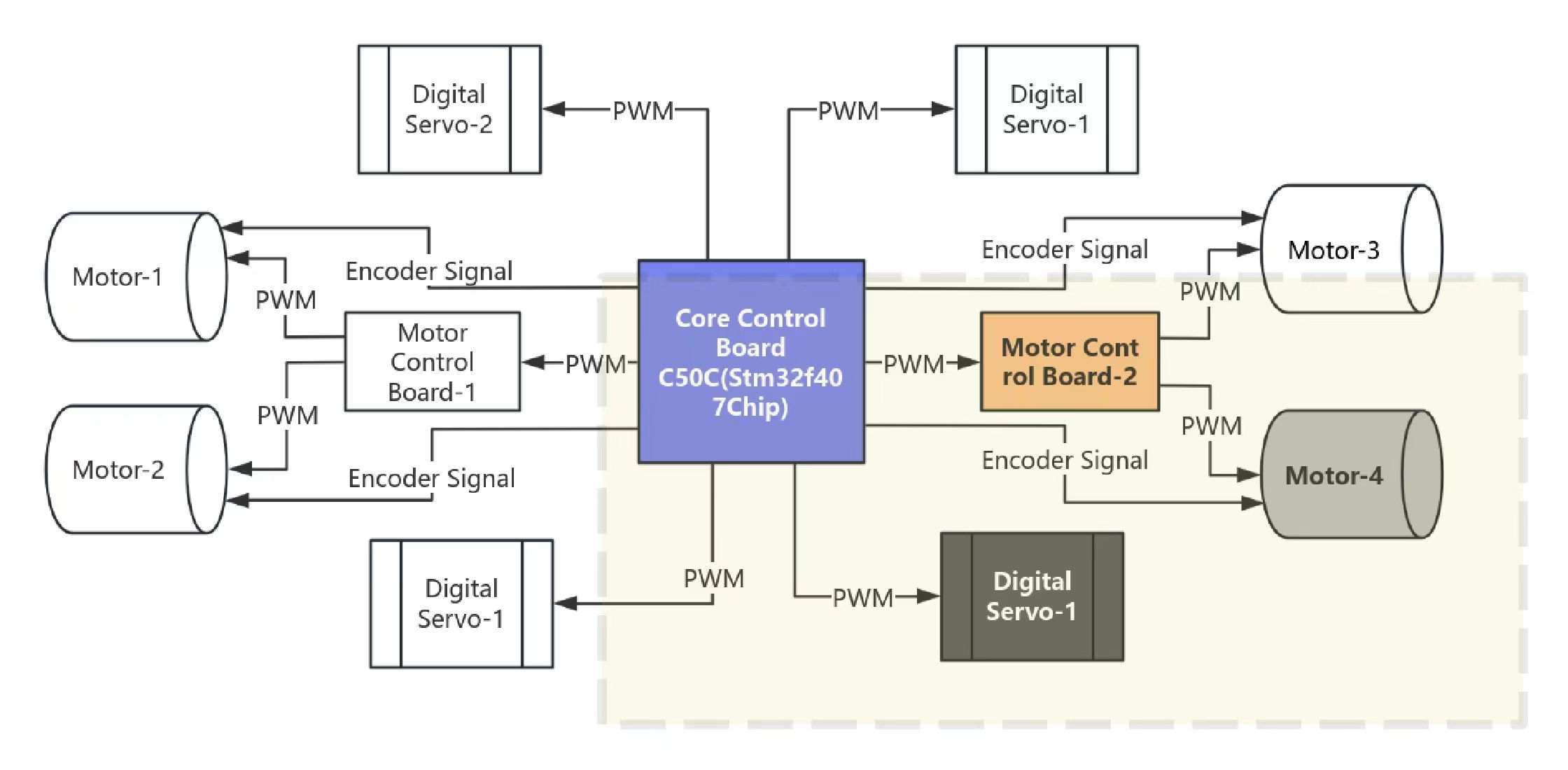
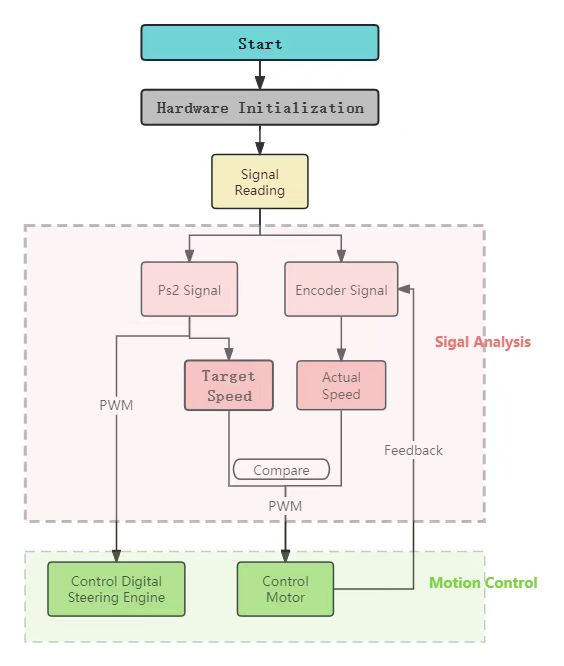
The vehicle used a C50C controller built around the STM32F407VET6 microcontroller. Its interfaces connected four encoder-equipped motors, two motor-control modules, the PS2 receiver, and the digital servos. Four 24 V, 1:51 planetary-geared brushed motors drove the Mecanum wheels.
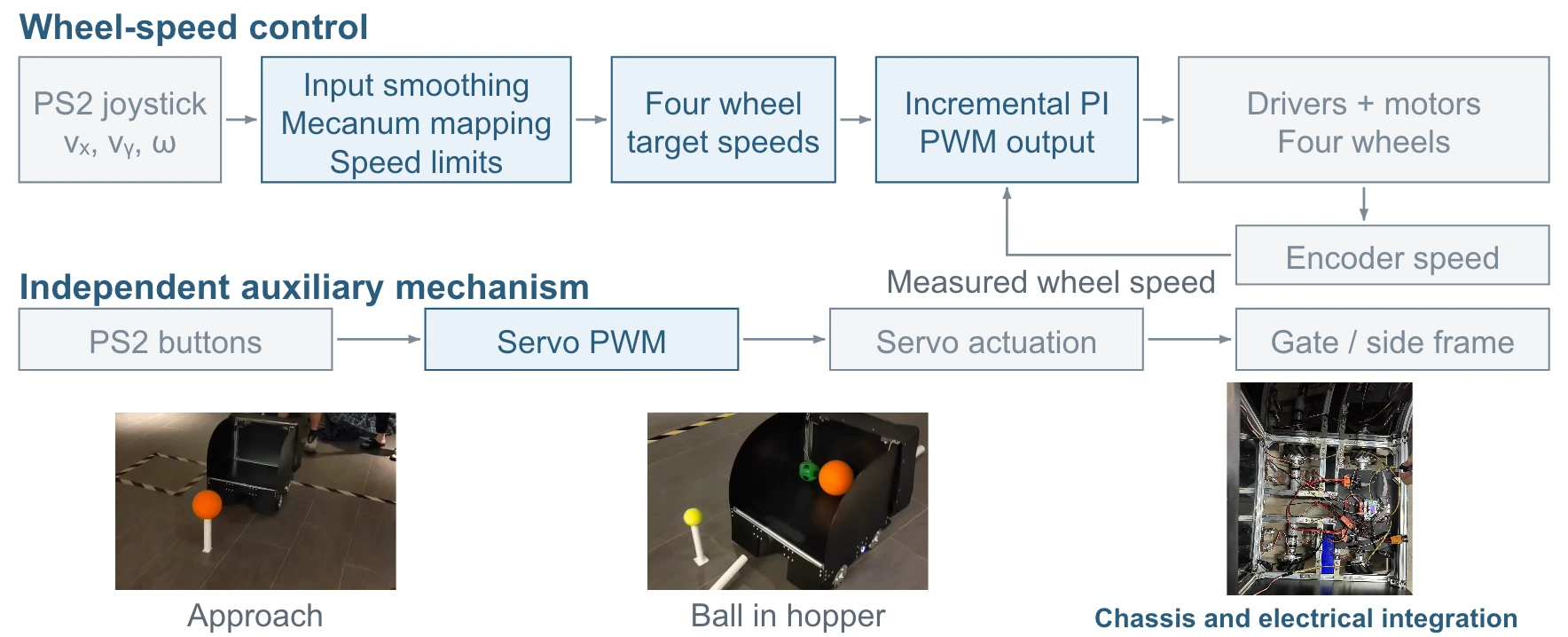
Analog joystick commands from the PS2 controller were converted into target wheel speeds through Mecanum-wheel kinematics. Encoder feedback supplied the measured speeds, and the control program adjusted motor PWM through a jointly tuned PID loop. Button inputs triggered the servo commands for the rear gate and auxiliary mechanisms.
Competition result & scope
The complete robot fit within the required 50 cm × 50 cm × 50 cm envelope.
The team completed a functional course-project prototype and placed second overall in the final competition. The documented prototype bill of materials was ¥3,401.43; this figure is included as a project record rather than a primary performance result.
The project demonstrated integrated remote control, omnidirectional mobility, collision-based collection, transport, and release. It did not include autonomous perception or navigation, and the project records do not provide independently documented measurements for maximum thrust, top speed, runtime, trajectory error, or storage capacity. Those quantities are therefore not presented as validated results.
Mechanical Design
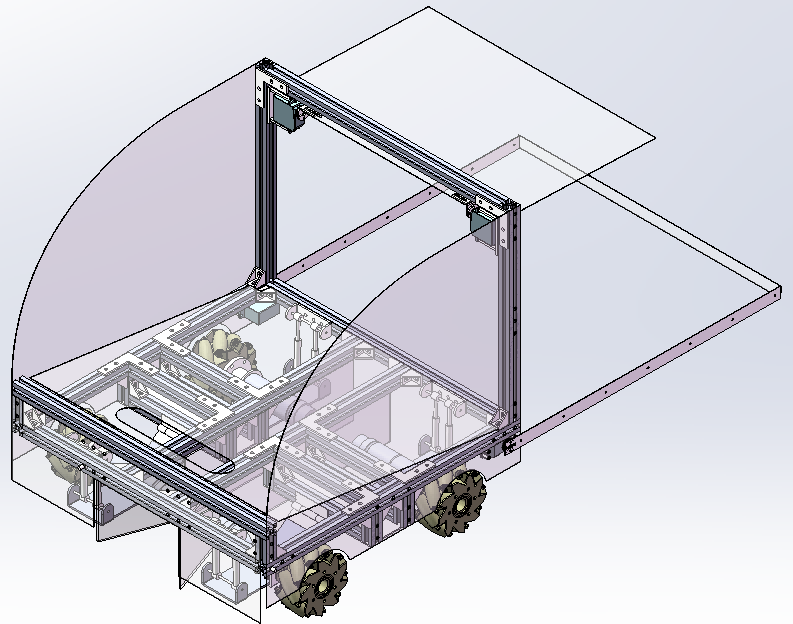
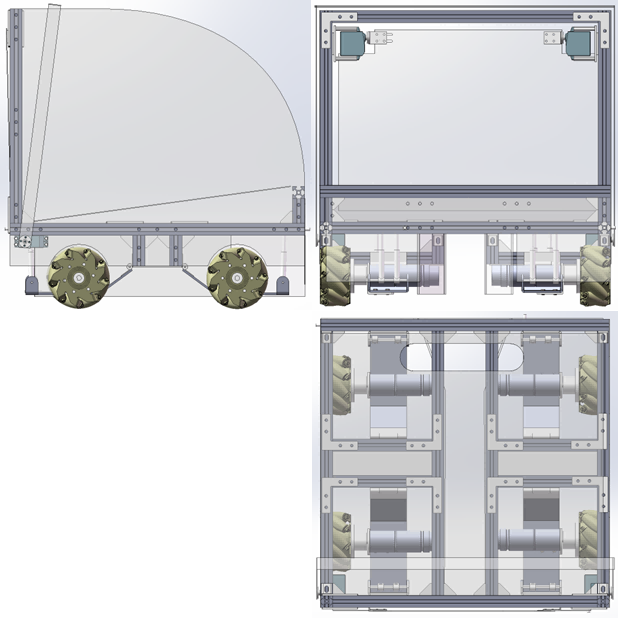
The chassis combined an aluminium-profile frame with nylon side and front panels. Nylon was selected for its lower weight and impact tolerance, while the rear release gate used an aluminium panel. An independent hinge-and-spring suspension was added at each wheel to reduce vibration from the Mecanum drivetrain and protect the electronics mounted on the lower chassis.
The mechanism was divided into four modules: the chassis and drivetrain, the front collision-based collection geometry, the internal storage area, and the rear release system. A 20 kg-rated, 270° digital servo operated the rear gate, allowing the stored balls to leave the hopper under gravity.
Prototype and Field Demonstration
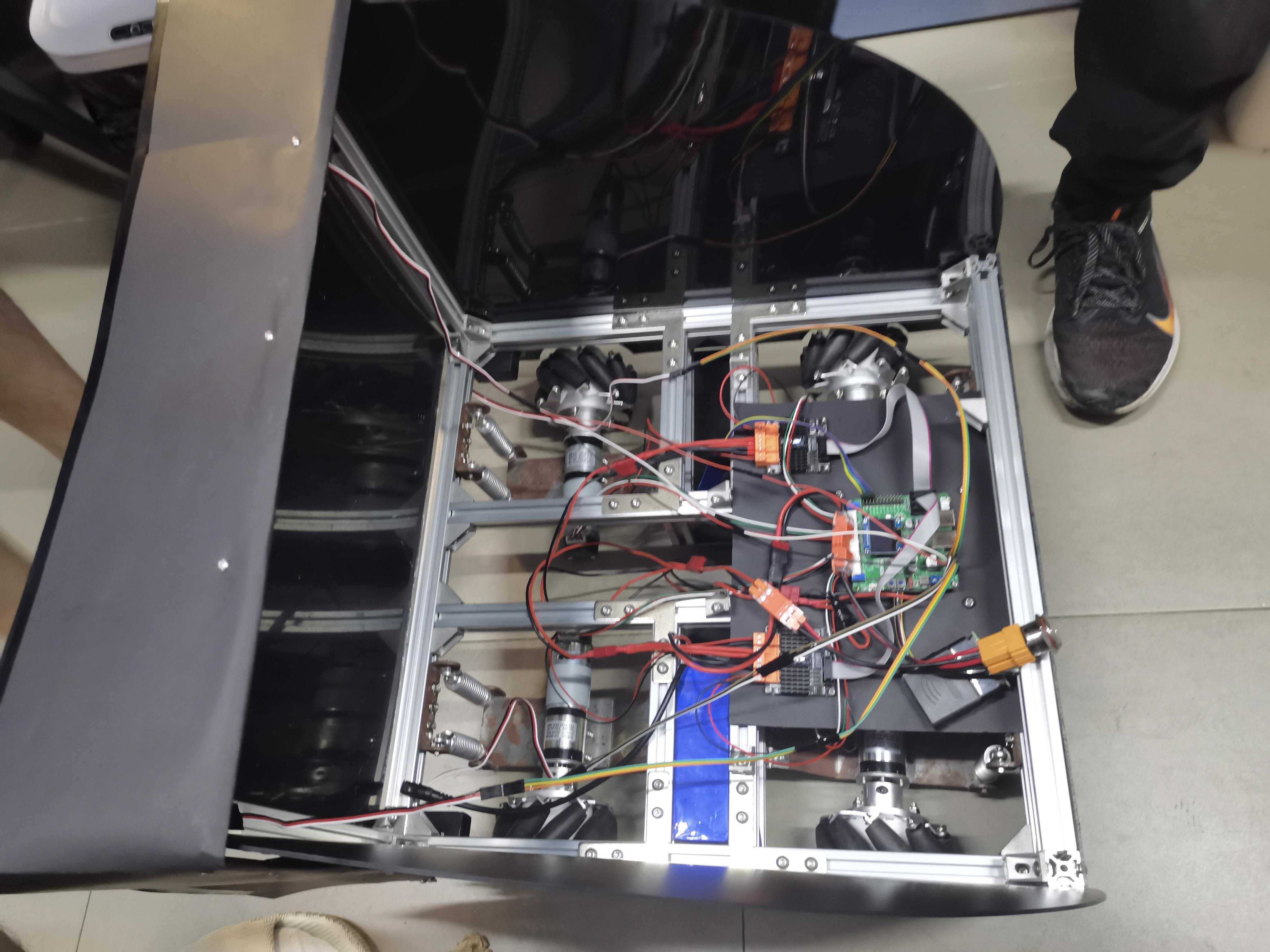
The final prototype integrated the fabricated enclosure, drivetrain, suspension, electronics, collection path, and release gate into one competition vehicle. Field testing and the final competition demonstrated remote omnidirectional motion, collision-based ball collection, onboard transport, and controlled release as a complete operating sequence.
Future Directions
- Reduce structural weight while preserving impact tolerance.
- Continue tuning motion-control parameters for smoother acceleration and positioning.
- Add perception and path-planning capabilities for autonomous ball detection and collection.