Robotics competition · SCUT
ROBOCON 2023
Fabricating and assembling a competition robot for ring collection and tossing.
My Contribution
Parts manufacturing
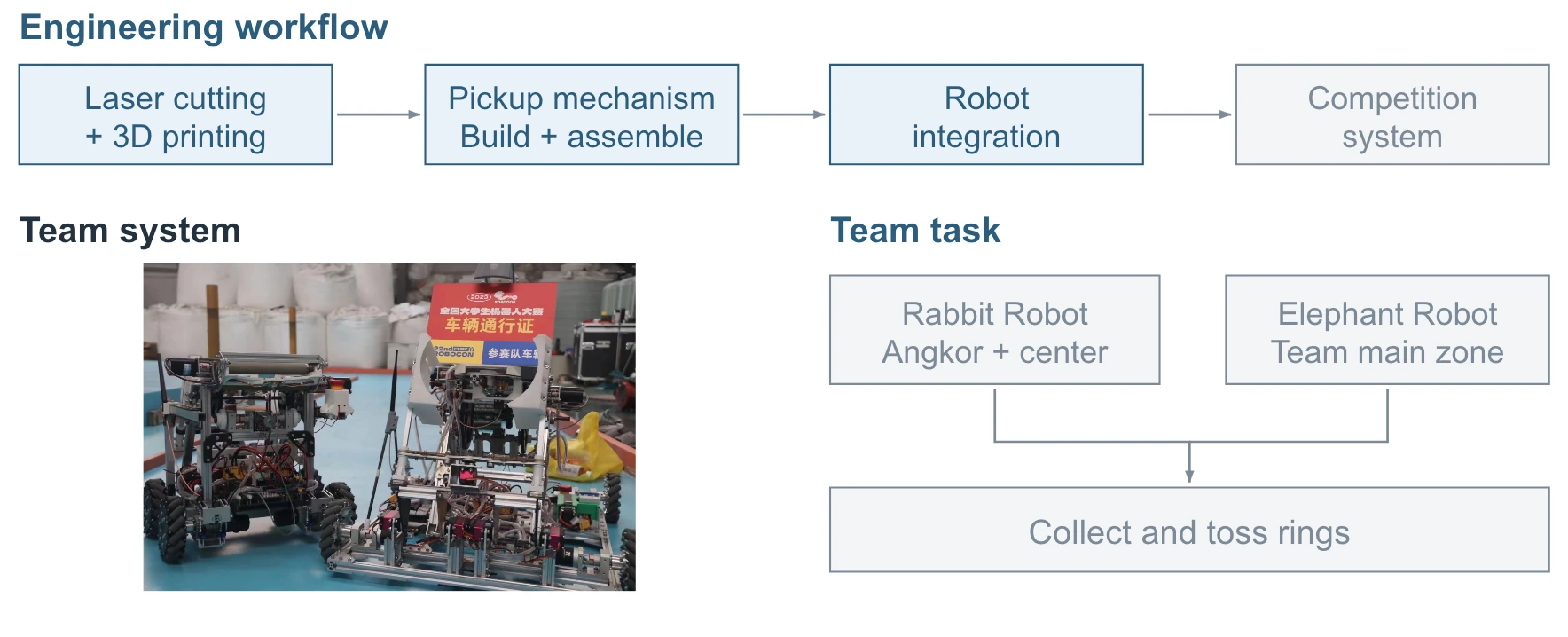
Worked primarily on the Rabbit Robot, producing components through laser cutting and 3D printing.
Ring pickup & assembly
Contributed to the fabrication and assembly of the ring pickup mechanism and participated in robot assembly.
Integration support
Made a limited contribution to the embedded implementation; my main work was mechanical fabrication and assembly.
The competition task
One Rabbit Robot and one Elephant Robot collected and tossed rings onto scoring poles. Their different movement zones made reliable pickup, handling, and coordination central to the system.
The national finals took place in Jiangyin on July 5–8, 2023.
The SCUT team received National Third Prize in the “Casting Flowers over Angkor Wat” event. This result is recorded in the official award list for the 22nd National College Student Robot Contest ROBOCON.
Building the hardware
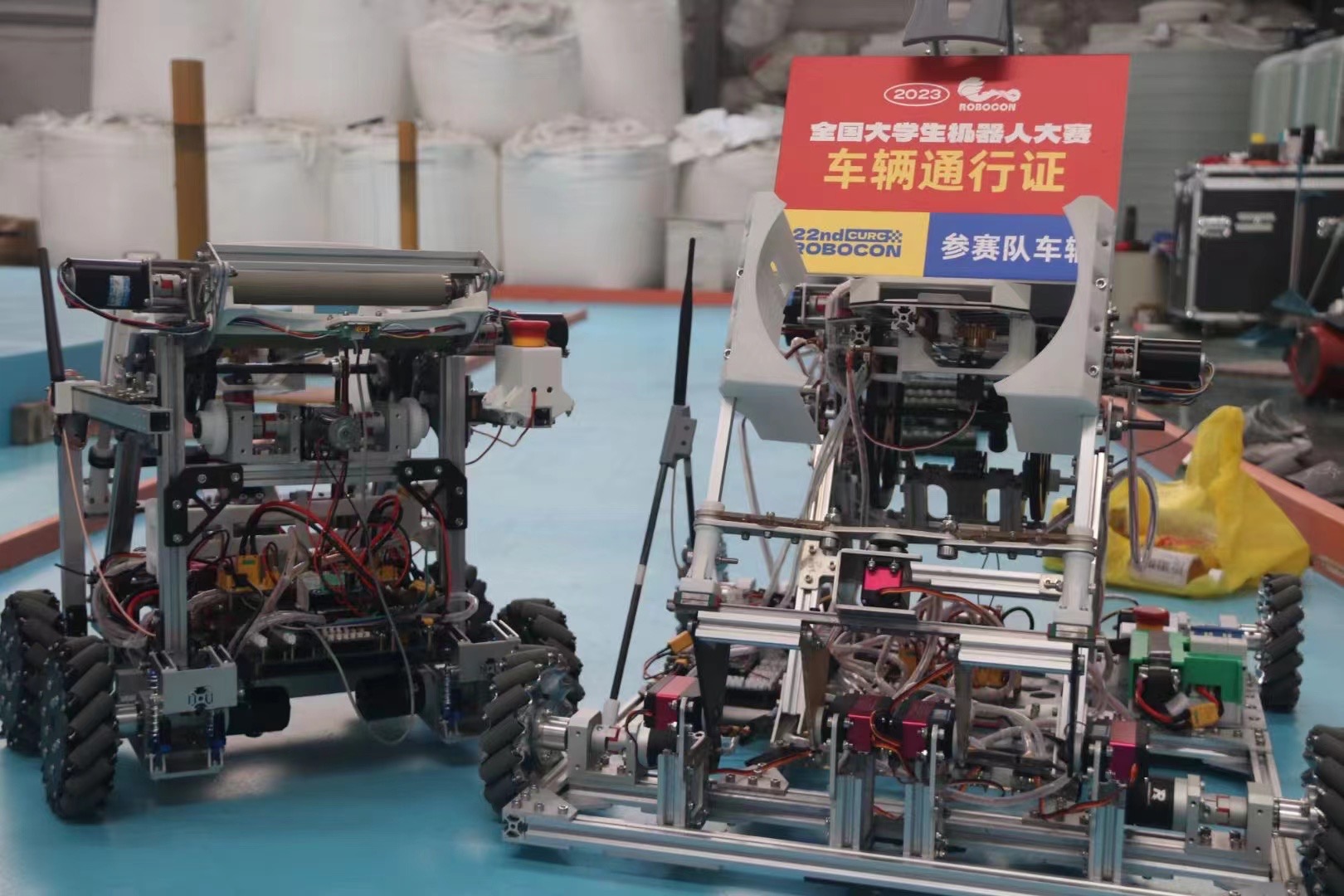
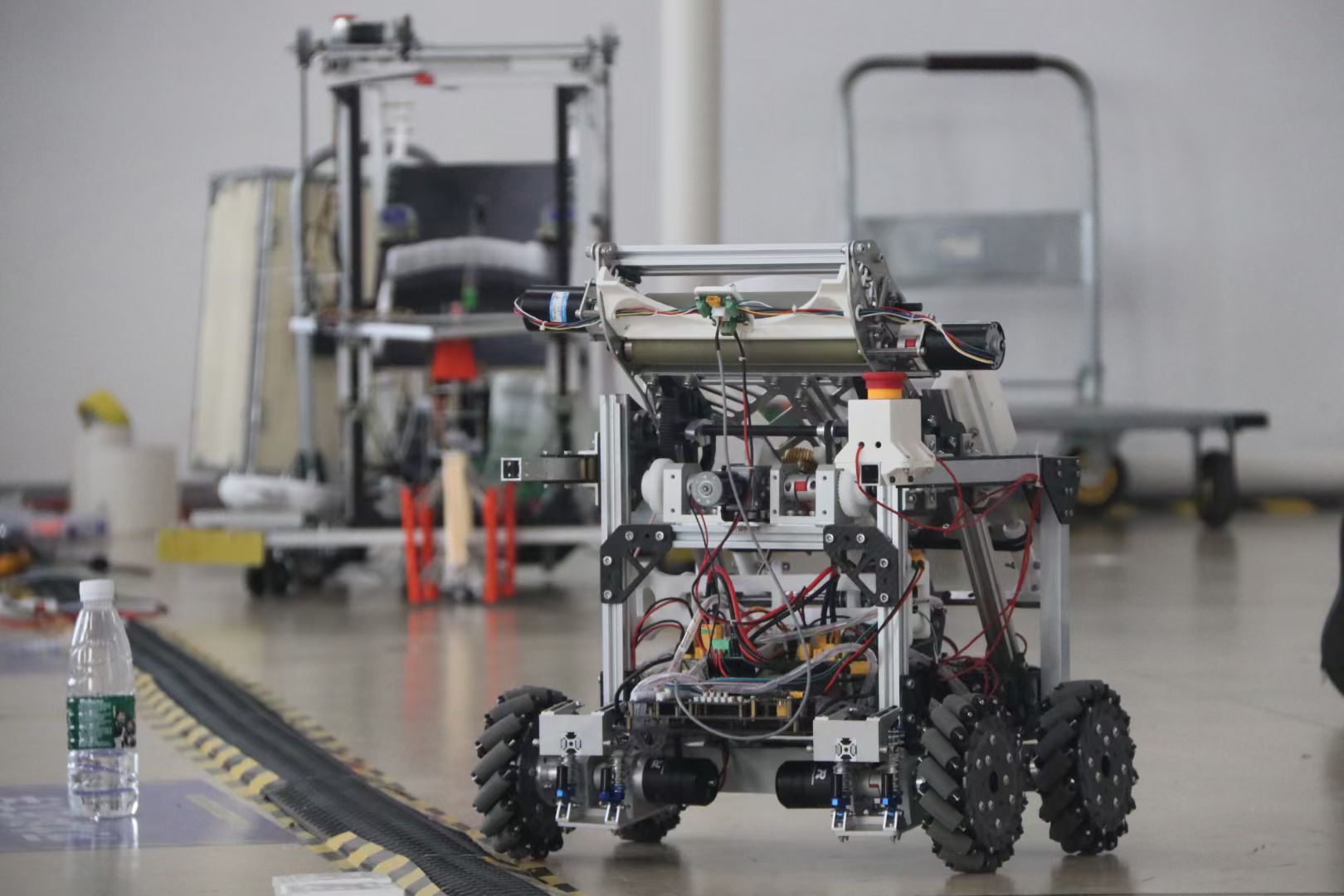
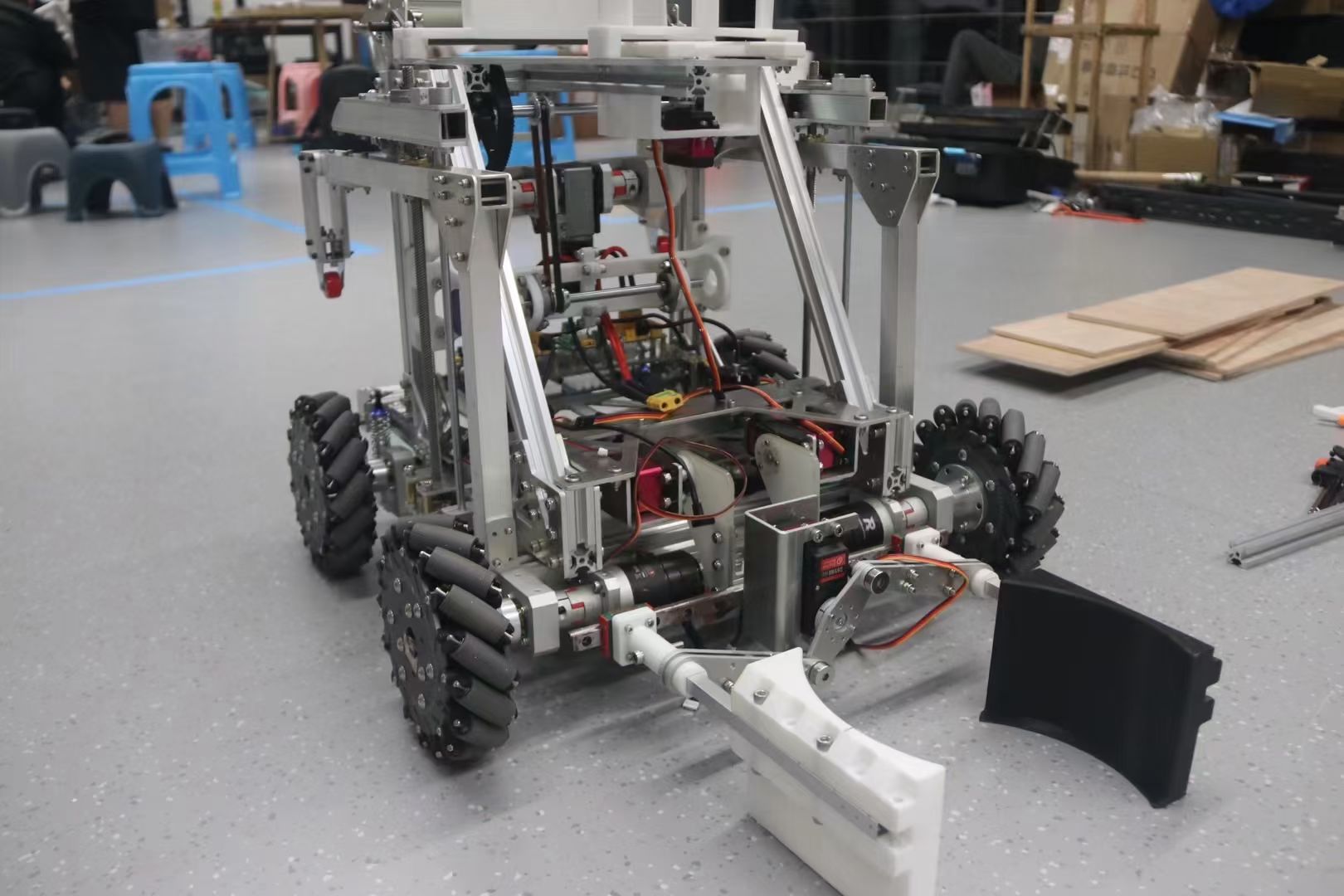
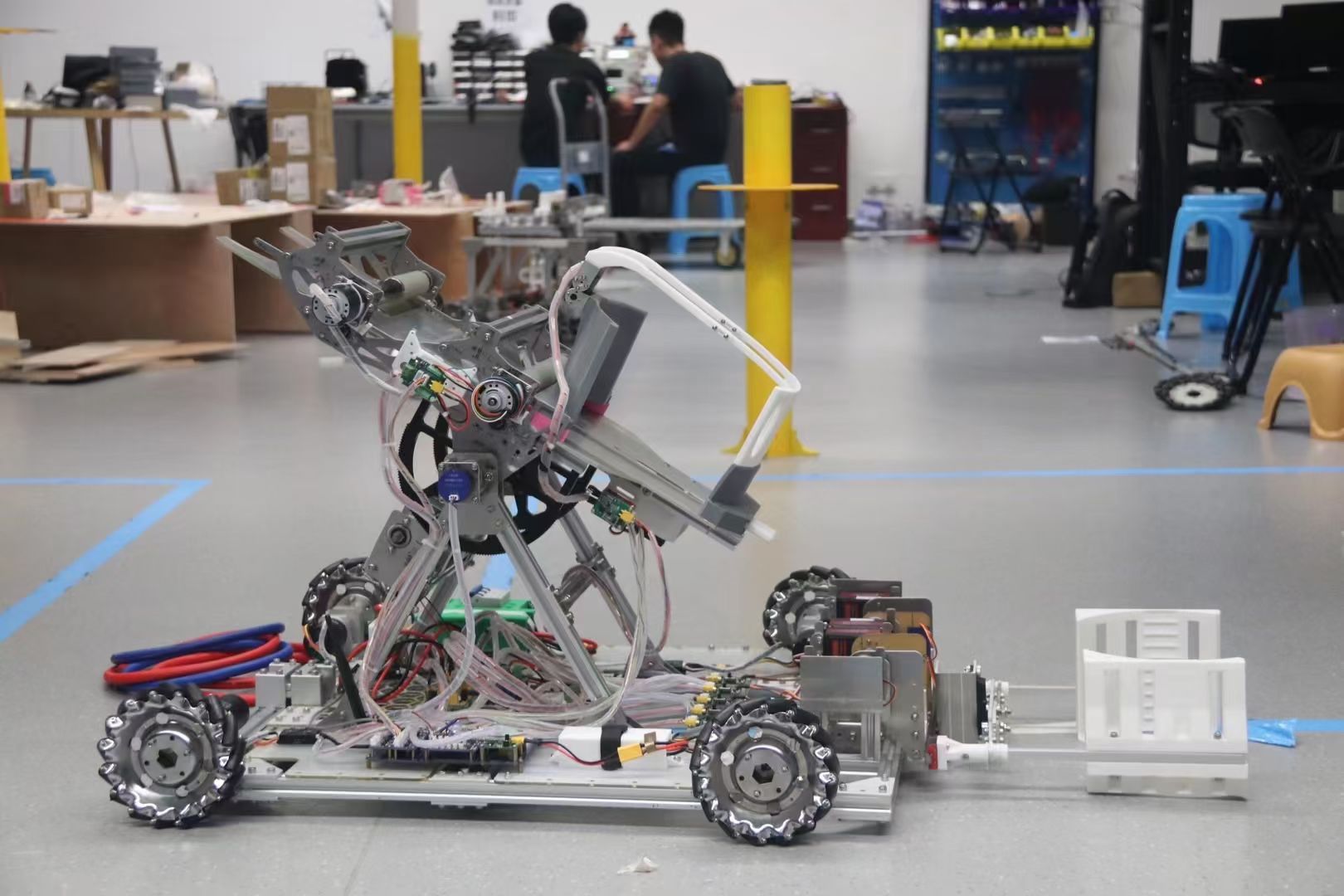
The robots were developed through repeated fabrication, assembly, and integration work. Laser-cut parts and 3D-printed components were used alongside the aluminium-profile frames and purchased drivetrain hardware. The Rabbit Robot included a ring pickup mechanism that transferred rings into the robot's handling path.
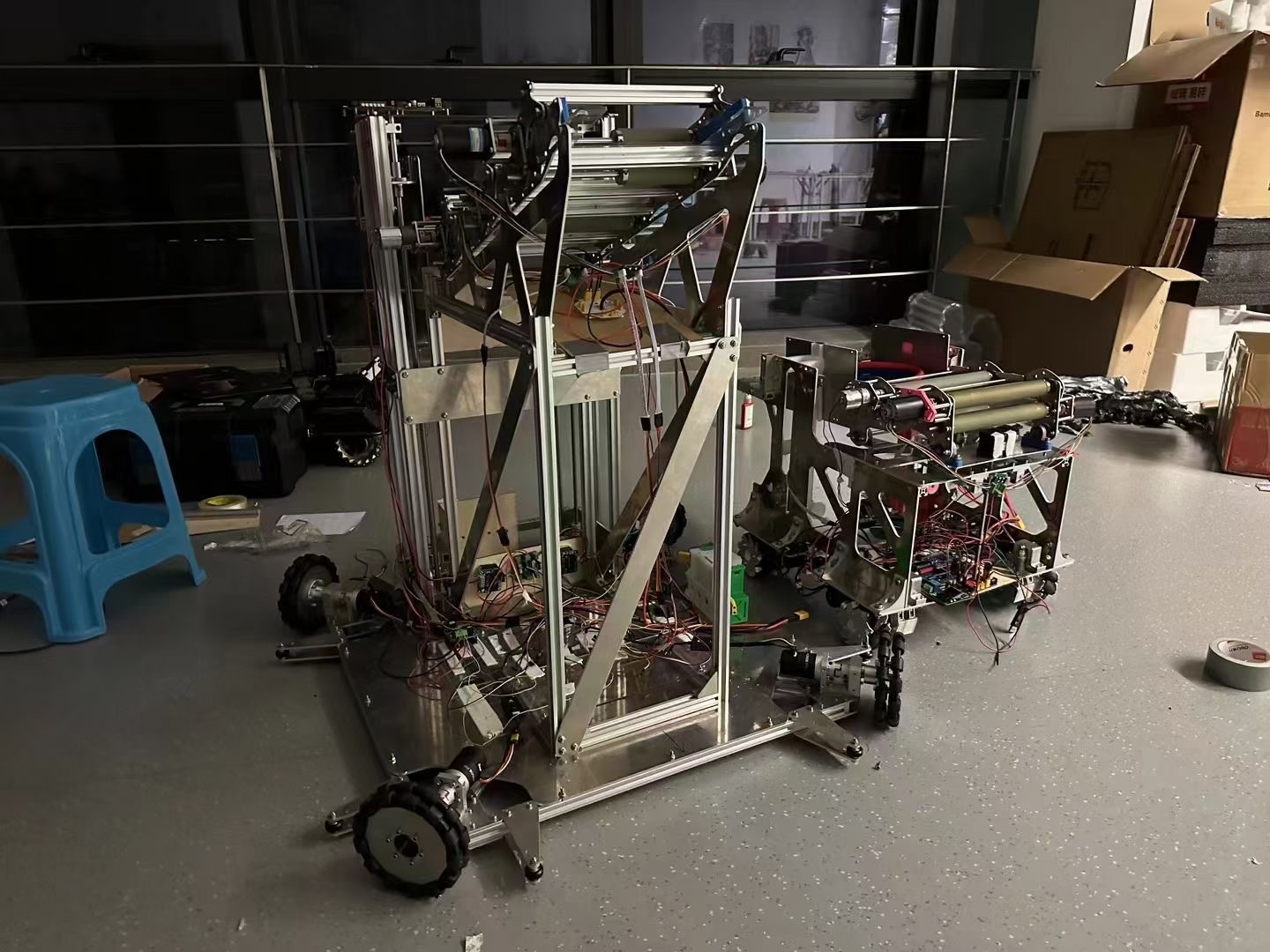
Mechanical integration required the ring-handling components, mobile base, frame, and electronics to operate as one competition system. The project record shows the compact and tall robot configurations at different stages of workshop assembly.
Two-robot system & competition rules
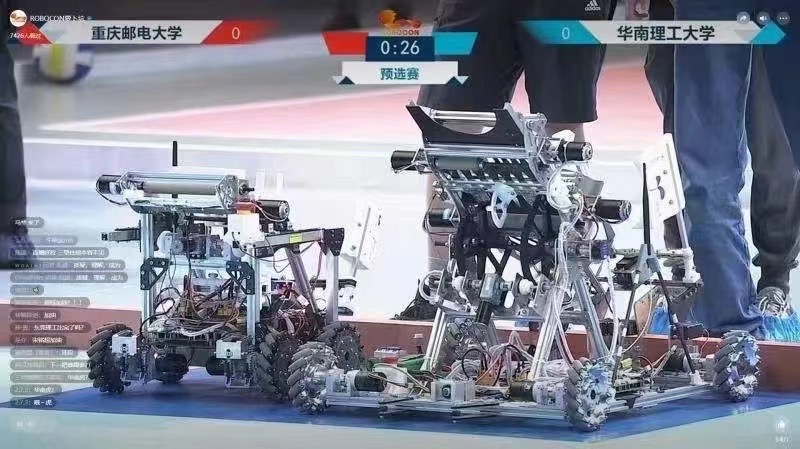
The completed system used two mechanically distinct mobile robots. Both platforms combined aluminium-profile structures, omnidirectional drivetrains, onboard electronics, and task-specific ring-handling mechanisms. Their different proportions and mechanisms reflected the separate movement zones and scoring roles defined for the Rabbit Robot and Elephant Robot.

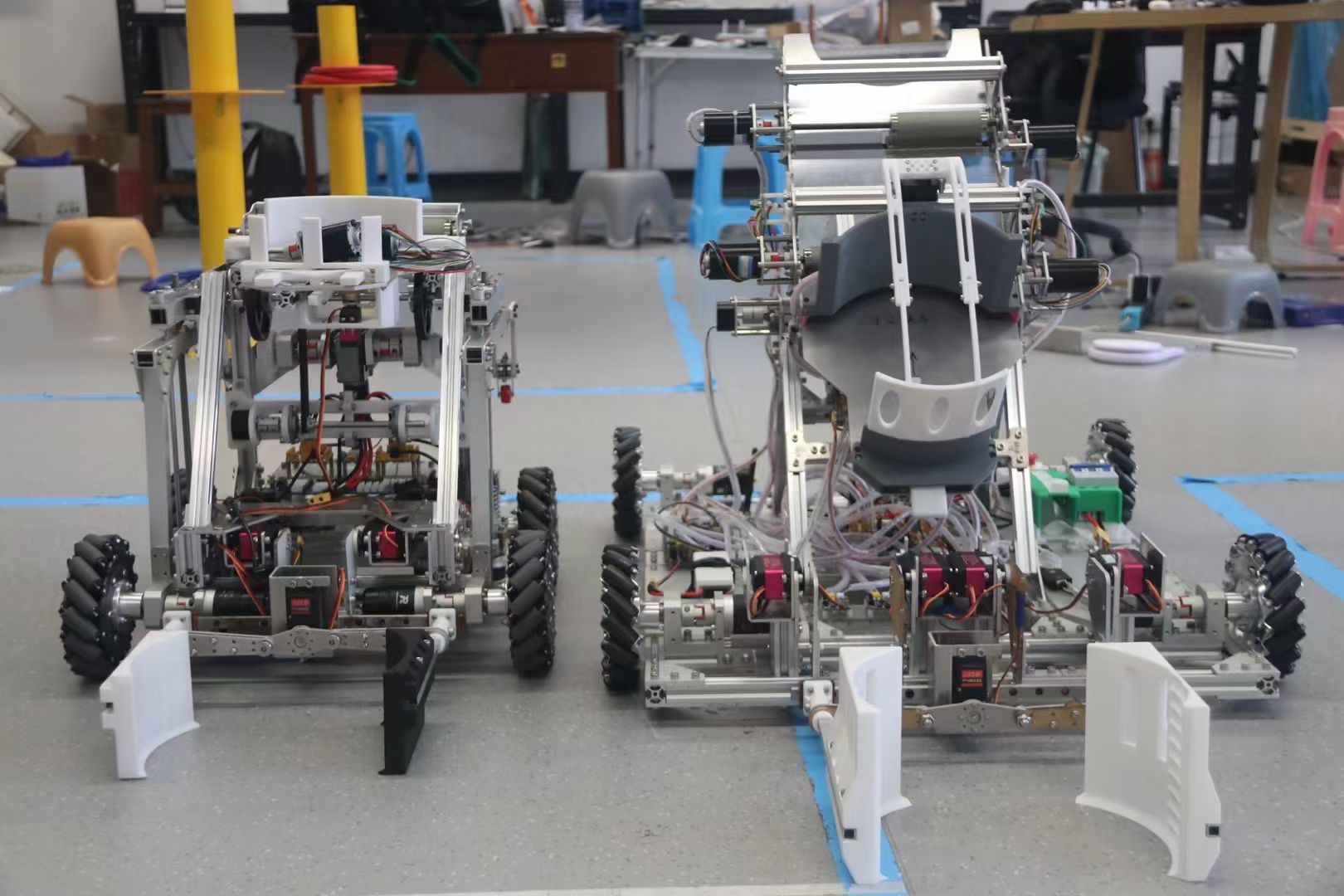
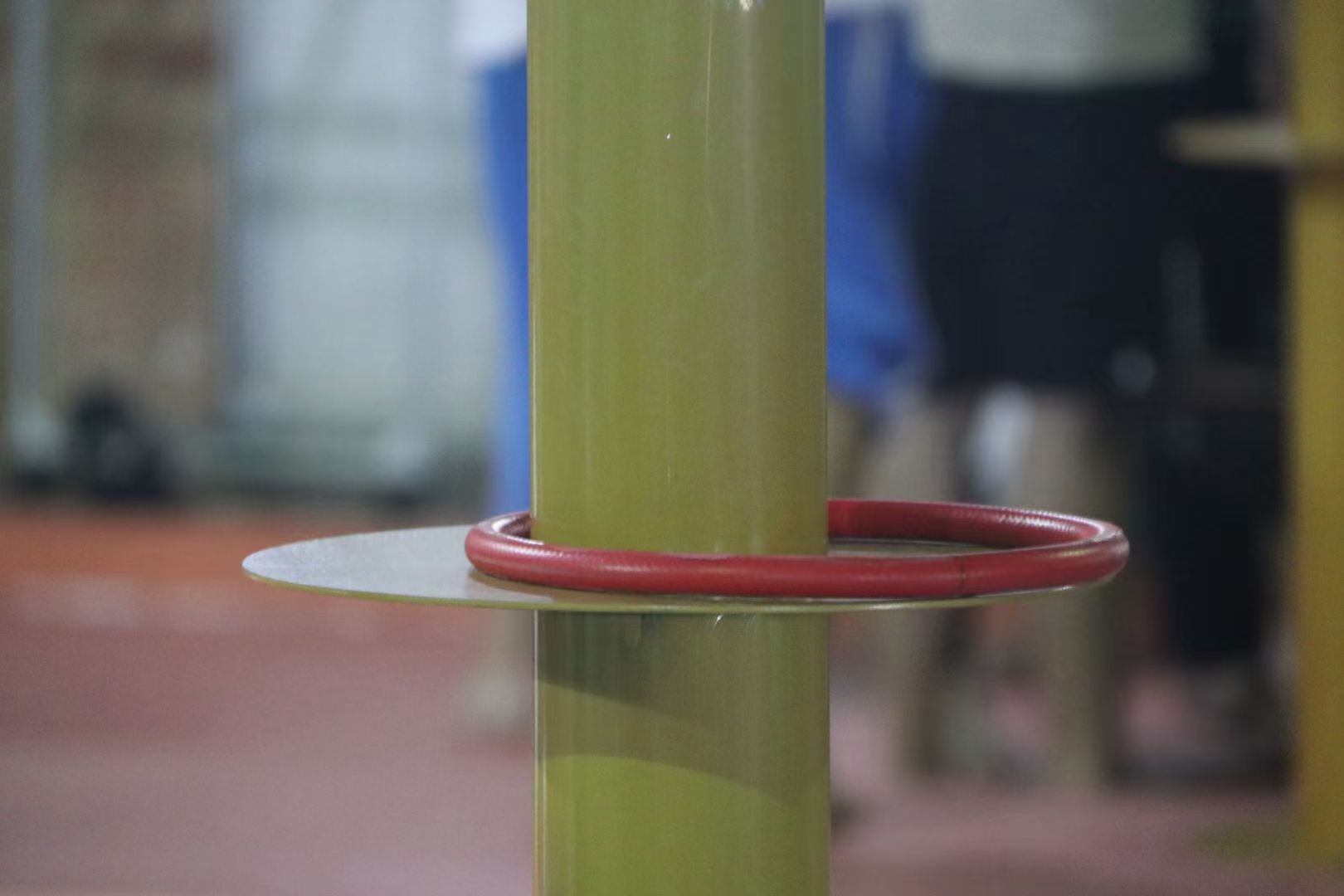
Under the official rules, each team could build one Rabbit Robot and one Elephant Robot. Together, the robots collected red or blue rings and tossed them toward 11 poles. The Rabbit Robot could enter the Angkor areas and center area, while the Elephant Robot operated within its team's main zone. A team achieved “Chey-Yo” by placing its color on top of all eight designated poles.
This rule set made ring acquisition, repeatable handling, and accurate placement central to the mechanical design. The photographs below document the SCUT robots on the competition field and a ring positioned on one of the scoring poles.